


Driving in Russia often turns small administrative tasks into things you would rather postpone: checking whether a fine has appeared, confirming a vehicle by its VIN, dealing with toll-road payments, or arranging OSAGO. Штрафы ГИБДД: проверка с фото brings those jobs into one Auto & Vehicles app instead of making me jump between unrelated services. I found its strongest appeal in that practical focus. It is not trying to be a general driving companion; it is built around checking and handling vehicle-related obligations.
The app is developed by Pays LLC – Штрафы ГИБДД and is available free of charge. That matters when judging its value: there is no purchase price to weigh against the features described here. The free entry point makes it easy to try for a single urgent task, while regular drivers can decide whether the convenience of keeping these checks together is worth making it part of their routine.
What the app is useful for in everyday driving
At its core, this is a service app for traffic-fine checks, toll roads in Russia, VIN-based vehicle checks, and online OSAGO handling. Those are separate needs, but they tend to appear together in real life. A driver who is checking a newly received notice may also want to verify the vehicle record, confirm an insurance task, or deal with a toll-road charge. Having these routes in one place is more useful than the short store description initially suggests.
I would describe the app as a practical dashboard rather than an educational driving tool. It does not need to entertain me or explain road rules at length. Its job is to help me identify an obligation and move toward resolving it. That narrow purpose is a strength because the interface can be approached with a specific question: “Do I have a fine?”, “What can I check using the VIN?”, or “Where do I handle this OSAGO task?”
The app has been available since February 2015, so it is not a brand-new experiment. Its scale also suggests that the format has reached a wide audience: it has passed ten million installs and holds a 4.7 average from roughly 893 thousand ratings. I would treat that as useful context rather than a guarantee. A high rating can indicate that the main workflow feels convenient, but it does not remove the need to check every result carefully before making a payment or relying on information for a legal or insurance matter.
Checking fines without turning it into a daily chore
The most obvious use is checking traffic fines. In my view, the real benefit is not that the task exists in the app; official and banking services may offer similar routes. The benefit is having a dedicated place where a driver can begin with the vehicle-related problem itself. If I am about to sell a car, borrow one for a trip, or simply want to settle outstanding obligations, a focused app is easier to remember than a scattered collection of websites and menus.
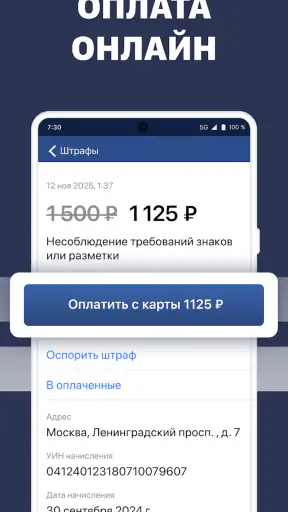
A sensible workflow is to use the app as an initial check, then review the displayed details before proceeding. I would not rush from a notification or search result straight to payment. Vehicle identifiers and fine information deserve a careful look, especially when more than one car is connected to a household or when a vehicle has recently changed hands. The app can reduce searching, but it does not replace the driver's responsibility to confirm that the record belongs to the right vehicle.
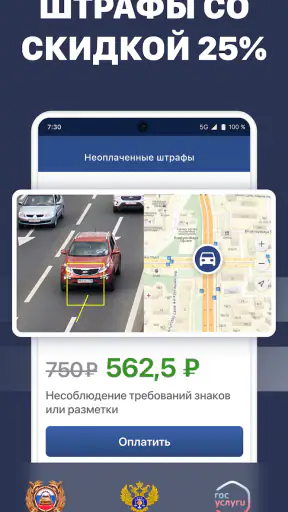
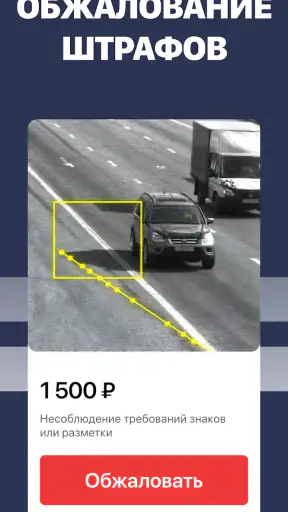
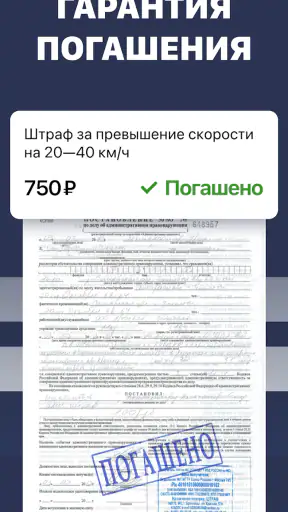
The reference to photo verification in the app's name is also relevant to how I would use it. When an alleged violation includes photographic evidence, seeing that context can help me distinguish a familiar vehicle and situation from an unexpected record. I would still regard any image or record as something to inspect rather than an automatic reason to accept the charge. That small pause is one of the best habits to build around a fine-checking tool.
Why the VIN and insurance tools change the value equation
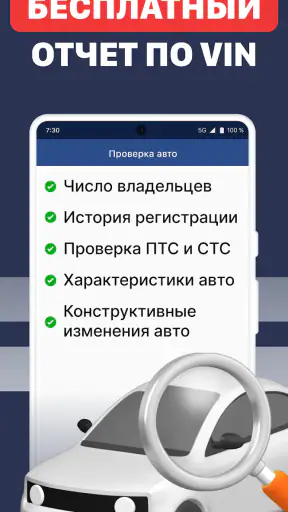
Many fine-checking apps would be easy to replace if they only repeated one lookup. The VIN check and online OSAGO route make this app more useful for ownership and preparation tasks. A VIN-focused check can be relevant when I am assessing a vehicle, reviewing information before a transaction, or trying to organize records for a car I already own. It gives the app a role before and after a fine appears.
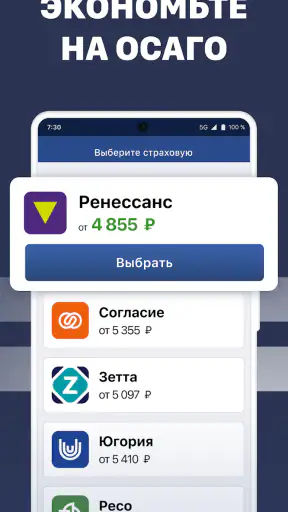
For OSAGO, I see the convenience mainly in reducing the number of places I need to visit online. Insurance is a task where details matter, so I would prepare the vehicle and driver information before starting rather than treating the process as a quick tap-through. The app can be a useful doorway to the process, but I would read the final information closely and save any important confirmation separately. Convenience is valuable here, but accuracy is more important than speed.
The combination creates a less obvious use case for people buying a used vehicle. I could use the VIN-related area during early research, check whether there are outstanding vehicle concerns, and then keep the insurance step in the same app when the purchase becomes serious. I would not treat one app as a complete substitute for every official document or inspection, but it can make the sequence easier to organize.
Toll roads fit naturally into the same workflow
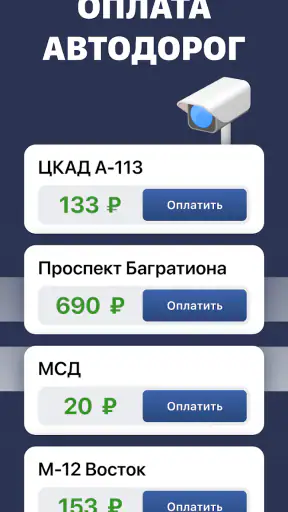
Toll-road support is another reason this is more than a single-purpose fine checker. A driver planning a long trip may need to think about toll payments before departure, while a driver who has already traveled may be trying to understand a charge afterward. Keeping that task near fine and vehicle checks is logical because all of them relate to the same car and the same journey.
My practical tip would be to handle toll-road preparation before setting off, not while driving or immediately after passing a toll point. That reduces distraction and gives me time to check the vehicle details and payment information calmly. The app is most helpful when it becomes part of trip preparation, not when I use it as an emergency fix from the roadside.
Free access, practical value, and the tradeoffs
The cost question is straightforward: the app is free. That means the initial decision is not whether a paid subscription will repay itself, but whether the time saved and the consolidated workflows are worthwhile. For someone who checks a vehicle once, free access lowers the barrier considerably. For a frequent driver, the value comes from repeated convenience rather than from avoiding a purchase price.
I would separate “free to install” from “every outcome is free.” The app provides access without a listed purchase price, but the underlying tasks may involve payments or insurance transactions. A fine, toll, or OSAGO arrangement is not made costless merely because the tool used to reach it is free. That distinction is important: the app can be judged as a free access point and organizer, while the financial obligation belongs to the relevant service or vehicle matter.
For me, the strongest value is consolidation. Instead of remembering one route for fines, another for toll roads, a separate VIN service, and a different insurance process, I can begin with one recognizable app. This is especially useful for families sharing vehicles, people who drive in several regions, or anyone who handles car paperwork only occasionally and forgets where each task normally lives.
The tradeoff is that consolidation can encourage overconfidence. A single app feels authoritative because it gathers several functions, but I would still compare important results with the relevant official documentation or provider when the decision has legal, financial, or ownership consequences. A convenient front door is not the same thing as a complete replacement for every source behind it.
Another limitation is that the app's usefulness depends on the information I enter and the vehicle I select. If I manage several cars, the risk of choosing the wrong record becomes more significant. I would slow down at every step that involves a plate, VIN, policy, or payment detail. That is not a flaw unique to this app, but its broad set of tools makes disciplined checking more important.
I also would not choose it solely because of its rating. The 4.7 average and large audience are reassuring signs of acceptance, yet my own standard is whether the specific task is clear and the result is understandable. A high rating cannot tell me whether the app fits my particular vehicle situation, how comfortable I am with its workflow, or whether I prefer using a government, insurer, or bank service directly.
Where it compares well with the usual alternatives
The usual alternatives are official portals, insurer websites, bank applications, and separate VIN-check services. Those options may be preferable when I want a direct relationship with one provider or need a document in a particular account. A bank app, for example, may already be the place I use for payments, while an insurer's own service may feel more natural for policy management.
This app's advantage is breadth within a driving-focused context. It is easier to start with a vehicle problem and see several relevant paths than to remember which separate service handles which part. The disadvantage is that a specialist alternative may offer a more direct experience for one task. If my only concern is renewing OSAGO with a known insurer, I may prefer that insurer's own channel. If I only need a government record, I may prefer the official route.
The best choice therefore depends on whether I value a unified starting point or a single-provider workflow. I would recommend this app to someone who wants the former. I would skip it for a driver who already has a trusted, well-organized system and does not want another place to manage vehicle information.
Small habits that make the app safer and more useful
I would check the selected vehicle before acting, especially in a household with multiple cars or after a recent sale.
I would use the VIN area during vehicle research, but treat it as one part of due diligence rather than the entire buying decision.
I would prepare toll-road and insurance tasks before a journey, when I can read details without time pressure or distraction.
I would inspect photographic evidence and fine details instead of treating a notification as final proof by itself.
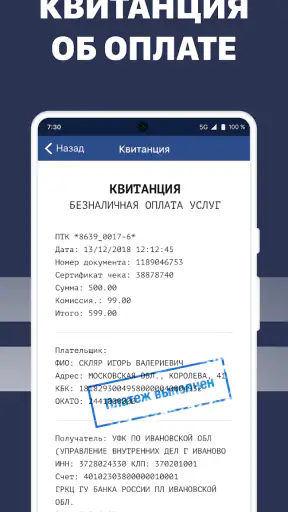
I would keep important payment or policy confirmations outside the app as well, so they remain easy to find when needed.
These habits reveal the app's real role. It is not a substitute for careful ownership records, official documents, or sensible payment checks. It is a convenient organizer that can shorten the path to those things. Used that way, it has more lasting value than a tool opened only when a driver is already worried about a fine.
Who should use it, and who should look elsewhere
I think the app is a good match for Russian drivers who want one free starting point for fines, toll roads, VIN checks, and OSAGO. It is particularly suitable for occasional drivers, used-car shoppers, families with several vehicle-related tasks, and people who dislike switching between multiple services. The Everyone age rating also makes it broadly accessible, although the responsibility for the transactions themselves still belongs to the adult handling the vehicle or policy.
It is less suitable for someone who needs only one narrow service and already has a preferred official or provider-specific channel. I would also be cautious about relying on it as the sole source for a disputed fine, a major vehicle purchase, or an insurance decision. In those cases, I would use it to organize the first check and then verify the important result through the appropriate authority or company.
Another reason to skip it would be personal preference around data and account management. Anyone uncomfortable entering vehicle or insurance details into a consolidated third-party app may prefer separate official routes. That is a reasonable tradeoff, not a sign that the app is poor. The convenience of one dashboard is valuable only if I am comfortable using that kind of dashboard.
My verdict on the free download
After looking at what it actually tries to do, I see Штрафы ГИБДД: проверка с фото as a useful free utility for drivers who want vehicle administration gathered in one place. Its value is not a flashy feature or a promise that every car problem disappears. Its value is the practical connection between traffic fines, photographic checks, toll roads, VIN research, and OSAGO.
I would recommend trying it if I regularly deal with Russian roads or vehicle paperwork and want a simpler starting point. The free price makes experimentation easy, while the broad audience and 4.7 average suggest that the central idea works for many users. I would still verify sensitive results, slow down before payments, and keep official records available.
My final judgment is a qualified recommendation: download it when consolidation matters, but choose a direct official or provider-specific service when one exact transaction demands maximum certainty or a specialized workflow. For everyday checking and preparation, it offers enough practical value to earn a place on a driver's phone without pretending to replace careful judgment.


